
How to Choose Influencer Marketing Channels: Instagram, TikTok, YouTube, or LinkedIn
A practical channel strategy guide for brands deciding where influencer marketing should run across visual trust, short-form testing, long-form education, and B2B pipeline influence.
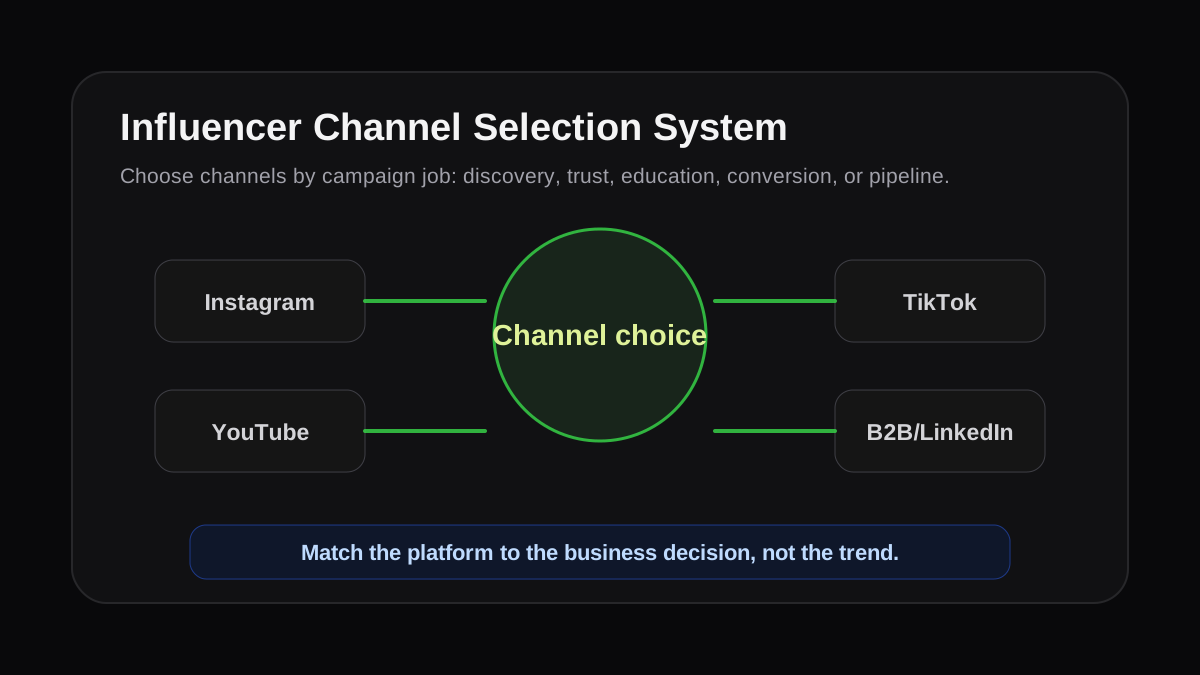
Choosing an influencer marketing channel should not start with which platform is hottest. It should start with the job the campaign needs to do. Instagram is strong for visual trust, lifestyle context, and reusable creator assets. TikTok is strong for native short-form testing, social commerce, and fast feedback. YouTube is strong for complex explanations and evergreen content. LinkedIn and B2B creator partnerships are strongest when the goal is professional trust and pipeline influence.
Bioby.ai's view is that channel strategy is creator workflow design. Each platform changes the creator type, brief, approval process, usage rights, disclosure rules, tracking setup, and reporting cadence. Copying the same asset across every channel usually creates coverage, not learning.
Start with the campaign job#
Before choosing a platform, answer five questions. Are you trying to create discovery, build trust, explain value, drive conversion, or influence a B2B buying committee? Do you need short-term reach or long-term content assets? Are you buying creator distribution or reusable creative? Will paid amplification matter? Can your team support the platform's approval and disclosure workflow?
A product launch may combine TikTok short-form tests with Instagram visual proof. A high-consideration SaaS product may need YouTube explainers and LinkedIn expert discussion. A consumer product may need TikTok Spark Ads and Instagram Partnership Ads. No channel is universally best. The best channel is the one that matches the business decision.
Instagram: visual trust and reusable creator assets#
Instagram works well when the buyer needs to see the product in context. Reels can drive reach, Stories can create urgency, carousels can educate, Collab posts can share visibility, and Partnership Ads can scale creator content through paid media.
The key is to negotiate usage rights and paid amplification permissions before content is produced. Sponsored Reels also need clear disclosure early in the content, not only a hashtag at the end of a caption. If a Reel performs well but the brand cannot boost, edit, or reuse it, the campaign loses much of its value.
TikTok: native testing and fast learning#
TikTok works when the brand wants to test hooks, creator language, short product stories, social commerce, and many content variations. The platform rewards content that feels native. It punishes heavily scripted ads disguised as creator posts.
Spark Ads can turn strong creator videos into paid media while preserving the creator's post and social proof. But Spark authorization, duration, disclosure, usage rights, and tracking must be managed carefully. TikTok's commercial content disclosure rules also make transparency part of distribution and trust.
YouTube: explanation and shelf life#
YouTube is strongest when the product requires explanation. Long-form videos can support reviews, tutorials, comparisons, case studies, and deep category education. Shorts can create discovery, but long-form content often carries the trust and detail needed for considered purchases.
Brands should manage integration placement, links, paid promotion labels, usage rights, and evergreen value. A YouTube integration may influence search, sales conversations, and customer education long after the first reporting window closes.
B2B and LinkedIn: trust, expertise, and pipeline#
B2B influencer marketing is not consumer-style reach on a professional network. It is people-led trust. The strongest partners may be practitioners, operators, customers, employees, founders, advisors, analysts, or technical experts.
Measurement should connect to CRM signals: target-account engagement, sales feedback, demo conversations, influenced pipeline, and whether content helps buyers understand the problem. Likes and impressions are not enough.
Build a portfolio, not a single-channel bet#
Mature teams often use channels together. TikTok tests language. Instagram builds visual trust. YouTube explains depth. LinkedIn influences professional buyers. The point is not to post everywhere. The point is to give each platform a specific job.
Bioby.ai recommends keeping platform-specific records: why each creator was selected, what content role they played, what rights were secured, how disclosure was handled, and what the campaign learned. Cross-platform work becomes valuable only when the learning stays connected.
Final takeaway#
Influencer channel selection is about job fit, not platform hype. Instagram builds visual trust. TikTok accelerates short-form learning. YouTube creates explanation and shelf life. B2B and LinkedIn influence professional trust and pipeline.
When brands connect channel, creator, rights, and data, influencer marketing becomes a learning system rather than a set of disconnected posts.
Use a practical channel decision matrix#
A better channel decision starts with a matrix, not a trend report. For each possible platform, list the campaign job, the buyer's decision difficulty, the creator's role, the rights you need, the amplification plan, and the reporting method.
If the product mainly needs to be seen in context, Instagram and TikTok may be efficient. If the buyer needs to understand a workflow, YouTube and expert creators may matter more. If the purchase requires internal consensus, LinkedIn, newsletters, podcasts, and customer-led content may be better channels.
This matrix forces the team to explain the reason behind each channel. It also prevents a common mistake: choosing a platform because competitors are visible there, then discovering later that the brand cannot create the right content, secure the right rights, or measure the right outcome.
Let budget follow the learning stage#
Early campaigns should not put too much money into one creator or one platform. Use smaller tests to learn which hooks, creator types, usage scenarios, and offers create useful signals. Then invest more heavily in the assets that show buyer intent, not just surface attention.
The learning itself should be recorded. Which creator explained the product clearly? Which platform generated better questions? Which content could sales reuse? Which rights were worth buying? In Bioby.ai, this kind of campaign memory is more valuable than a one-time report because it improves the next round of creator selection.
Design cross-platform progression#
Cross-platform influencer marketing should not mean cropping the same video into different sizes. A better sequence gives each channel a specific role. TikTok tests language and hooks. Instagram builds visual proof. YouTube carries the full explanation. LinkedIn supports professional discussion and buying committee confidence.
For example, an AI workflow brand might use TikTok to test the promise of saving time, Instagram to show real team use, YouTube to walk through the full workflow, and LinkedIn experts to discuss risk, governance, and adoption. That system is more durable than chasing a single viral post.
Avoid the common channel mistakes#
The first mistake is choosing based on platform hype. The second is choosing creators by follower count instead of audience fit and credibility. The third is failing to secure usage and paid amplification rights before content performs. The fourth is reporting only reach, which makes it impossible to decide what to do next.
The solution is campaign memory: creator fit, content role, approval history, rights, disclosure status, tracking setup, and the actual business signal created by the content. Without that memory, every campaign starts from zero.
Operating checklist before launch#
Before contracting a creator, define the content job, the approval owner, the required disclosure, the usage rights, the tracking method, and the reporting window. This sounds basic, but most creator programs break because one of these items is assumed rather than documented. The creator thinks the brand is buying a post. The media team later wants paid usage. Legal wants a different claim. The reporting team cannot connect the content to a campaign ID. None of these problems are creative problems. They are workflow problems.
Bioby.ai's operating principle is that the record should travel with the creator relationship. The team should know why a creator was selected, what audience they were expected to reach, what the brief asked them to do, what rights were granted, what changed during approval, and what signal came back after publication. That record turns a campaign into a reusable learning asset.
Creator evaluation scorecard#
A useful scorecard should include audience fit, content credibility, format skill, collaboration reliability, rights flexibility, and signal quality. Audience fit asks whether the creator reaches the people the brand actually needs. Content credibility asks whether the creator's recommendation would be believed. Format skill asks whether the creator is strong in the specific format being purchased. Collaboration reliability covers timelines, revisions, and responsiveness. Rights flexibility determines whether the content can become an asset. Signal quality measures whether comments, questions, clicks, or sales feedback create useful learning.
This scorecard prevents teams from overvaluing follower count. A smaller creator with a credible audience, clean communication, and usable rights may be more valuable than a larger creator who produces one impressive but isolated post.
Reporting questions that improve the next campaign#
The best reports do not only describe what happened. They help the team decide what to do next. After each campaign, ask which creator should be renewed, which content role worked, which platform generated the most useful questions, which claims confused the audience, which asset deserves paid amplification, and which rights should be bought upfront next time.
If the report cannot answer those questions, it may be visually polished but operationally weak. Influencer marketing improves when each campaign leaves behind cleaner judgment for the next campaign.
A practical example#
Imagine a brand launching a new workflow product. Instagram's job could be to show credible scenes of real teams using the product. TikTok's job could be to test short hooks such as saving meeting time, building a report quickly, or reducing manual coordination. YouTube's job could be to let a creator demonstrate the complete workflow from problem to result. LinkedIn's job could be to let an expert explain why teams are changing the old way of working.
All four channels are useful, but they are not doing the same work. Instagram creates visual proof. TikTok tests language. YouTube explains the full process. LinkedIn builds professional confidence. If the brand simply reposts the same ad everywhere, it misses the unique value of each channel.
This example also changes how the team should brief creators. The Instagram creator needs product context and visual do's and don'ts. The TikTok creator needs hooks, scenes, and permission to speak natively. The YouTube creator needs a real product walkthrough and enough time to understand it. The LinkedIn creator needs the business argument, customer context, and room to share an actual point of view.
How Bioby.ai thinks about channel work#
Bioby.ai does not treat influencer marketing as a list of posts to purchase. It treats it as a relationship and learning system. Each platform reveals a different kind of signal. Instagram reveals visual trust. TikTok reveals customer language. YouTube reveals depth of understanding. LinkedIn reveals professional consensus and buying committee friction.
When those signals stay connected, the team can make better decisions next time: which creators to renew, which rights to negotiate, which claims need clearer proof, which content should be amplified, and which channel should not receive more budget yet. That is the difference between running campaigns and building an influencer marketing capability.
Continue this topic path#
This article is part of the same topic path. Useful next reads:
- Instagram Influencer Marketing: Reels, Stories, Partnership Ads, and Rights
- TikTok Influencer Marketing: Short-Form Testing, Spark Ads, and Social Commerce
- YouTube Influencer Marketing: Long-Form Explainers, Shorts, and Evergreen Rights
- B2B and LinkedIn Influencer Marketing: Expert Trust, Employee Voices, and Pipeline Signals
Sources#
Related Articles
Instagram Influencer Marketing: Reels, Stories, Partnership Ads, and Rights
8 min read
A practical Instagram influencer marketing guide covering Reels, Stories, Collab posts, Partnership Ads, disclosures, usage rights, and reporting.
Read article →TikTok Influencer Marketing: Short-Form Testing, Spark Ads, and Social Commerce
8 min read
A practical TikTok influencer marketing guide covering creator fit, native short video, Spark Ads authorization, disclosure, and conversion tracking.
Read article →YouTube Influencer Marketing: Long-Form Explainers, Shorts, and Evergreen Rights
8 min read
A practical YouTube influencer marketing guide covering long-form integrations, Shorts, paid promotion labels, creator boosts, and evergreen content rights.
Read article →B2B and LinkedIn Influencer Marketing: Expert Trust, Employee Voices, and Pipeline Signals
8 min read
A practical B2B influencer marketing guide covering LinkedIn creators, employee advocacy, thought leadership, CRM signals, and pipeline reporting.
Read article →