
TikTok Influencer Marketing: Short-Form Testing, Spark Ads, and Social Commerce
A practical TikTok influencer marketing guide covering creator fit, native short video, Spark Ads authorization, disclosure, and conversion tracking.
TikTok influencer marketing is not about making ads look slightly less like ads. It is about letting creators test product stories in the language of the platform. TikTok is useful for short-form learning, social commerce, content variation, and Spark Ads amplification, but it requires disciplined authorization, disclosure, tracking, and live feedback.
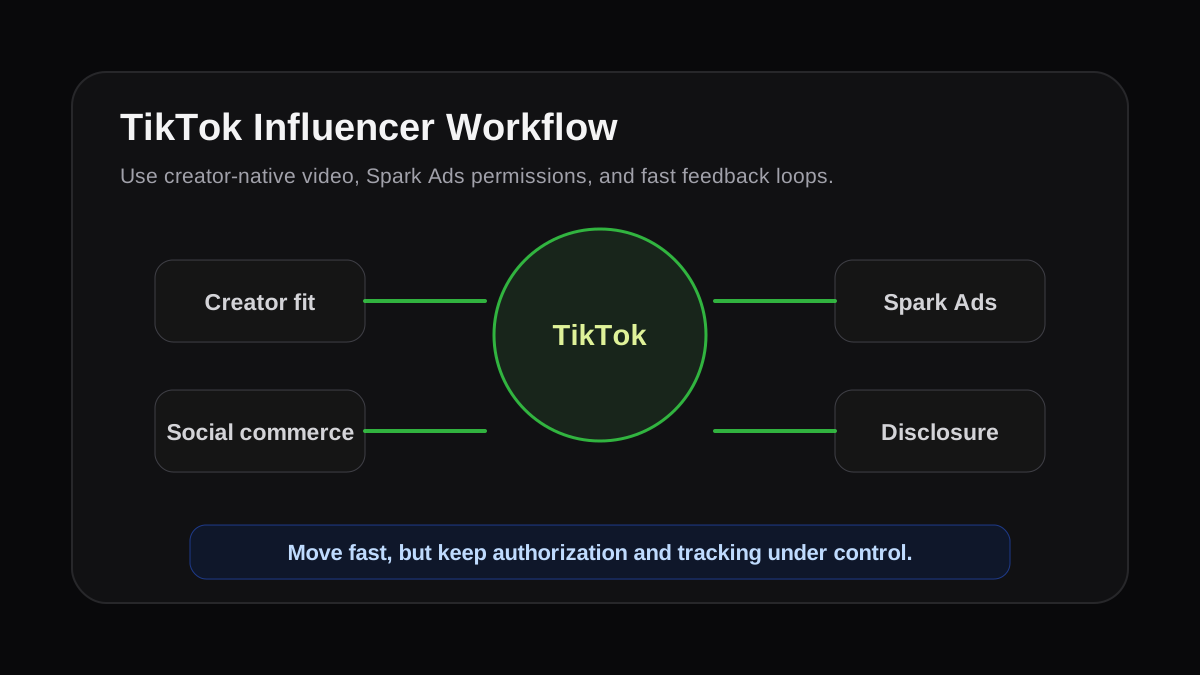
Use TikTok as a learning system#
TikTok gives fast feedback on hooks, scenes, creator tone, offers, and product demonstrations. A brand can test several micro creators and angles instead of placing the whole budget on one large account.
The risk is over-control. A scripted TikTok often feels like a brand ad and loses the creator's advantage. The brief should define the job and boundaries, not every line.
Plan Spark Ads before launch#
Spark Ads let brands amplify creator videos while keeping the original post, account, and social proof. This can turn a strong organic asset into paid media. But Spark authorization is tied to specific videos and durations, so it needs operational tracking.
Contracts and briefs should clarify which videos can be authorized, how long authorization lasts, whether renewal is expected, whether the brand can use the content elsewhere, and what happens if the creator edits or deletes the post.
Disclosure is part of trust and distribution#
TikTok's commercial content disclosure setting is required for content that promotes a brand, product, or service. Brand mentions, product recommendations, links, and promo codes can all trigger disclosure requirements.
Brands should verify that disclosure is active, the video communicates the partnership clearly, and links or codes are correct. Transparency is not a performance tax. It reduces risk and supports audience trust.
Track natural and paid performance separately#
TikTok users may click, search later, use a code, visit a shop, or convert after retargeting. One signal will not explain the full impact. Give each creator a unique link, code, and content ID. If Spark Ads are used, separate organic performance from paid amplification.
Review first-three-second retention, completion, saves, shares, comment questions, click behavior, code use, Spark Ads results, and whether the content can become a reusable asset.
Final takeaway#
TikTok is a strong channel for fast creator learning and short-form amplification. Bioby.ai's recommendation is to treat it as a test-and-scale workflow: creators generate native signals, the brand manages authorization and tracking, and the best assets move into controlled amplification.
Brief around hooks and situations#
The first seconds of a TikTok video decide whether the audience continues watching. A strong brief gives creators several possible hooks: a misconception, a surprising result, a before-and-after, a specific pain point, a realistic use case, or a question that viewers might debate.
The brief should also describe situations, not only features. A skincare product is not just an ingredient list. It is a morning routine problem. A workflow tool is not just automation. It is the moment before a Monday meeting when someone needs a report without manual work.
Test in small batches#
TikTok has high creative variance. One video rarely tells the full story. Test several creators and angles, then review retention, comments, saves, shares, clicks, and conversion signals. Use the first round to learn. Use the second round to refine. Use Spark Ads only when the asset is strong enough and rights are clear.
Small-batch testing prevents false conclusions. A poor result might mean the hook was wrong, the creator was mismatched, the offer was unclear, or the product needed more context. Multiple tests help isolate the problem.
Treat comments as research#
TikTok comments often reveal what the audience actually cares about: price, proof, use steps, side effects, shipping, comparison, skepticism, or purchase path. Strong teams turn those comments into the next creative brief.
Bioby.ai recommends grouping comment themes into product questions, trust barriers, price concerns, use cases, competitor comparisons, and buying friction. TikTok then becomes a consumer language research channel, not only a distribution channel.
Check readiness before amplification#
Not every organic winner should become a Spark Ad. Before amplification, confirm disclosure, claim accuracy, comment moderation, landing page readiness, inventory, customer support, authorization duration, and tracking. Paid media can scale problems as quickly as it scales performance.
Speed matters on TikTok, but speed needs workflow discipline. The brands that win are fast because their rights, approval, and measurement systems are ready.
Operating checklist before launch#
Before contracting a creator, define the content job, the approval owner, the required disclosure, the usage rights, the tracking method, and the reporting window. This sounds basic, but most creator programs break because one of these items is assumed rather than documented. The creator thinks the brand is buying a post. The media team later wants paid usage. Legal wants a different claim. The reporting team cannot connect the content to a campaign ID. None of these problems are creative problems. They are workflow problems.
Bioby.ai's operating principle is that the record should travel with the creator relationship. The team should know why a creator was selected, what audience they were expected to reach, what the brief asked them to do, what rights were granted, what changed during approval, and what signal came back after publication. That record turns a campaign into a reusable learning asset.
Creator evaluation scorecard#
A useful scorecard should include audience fit, content credibility, format skill, collaboration reliability, rights flexibility, and signal quality. Audience fit asks whether the creator reaches the people the brand actually needs. Content credibility asks whether the creator's recommendation would be believed. Format skill asks whether the creator is strong in the specific format being purchased. Collaboration reliability covers timelines, revisions, and responsiveness. Rights flexibility determines whether the content can become an asset. Signal quality measures whether comments, questions, clicks, or sales feedback create useful learning.
This scorecard prevents teams from overvaluing follower count. A smaller creator with a credible audience, clean communication, and usable rights may be more valuable than a larger creator who produces one impressive but isolated post.
Reporting questions that improve the next campaign#
The best reports do not only describe what happened. They help the team decide what to do next. After each campaign, ask which creator should be renewed, which content role worked, which platform generated the most useful questions, which claims confused the audience, which asset deserves paid amplification, and which rights should be bought upfront next time.
If the report cannot answer those questions, it may be visually polished but operationally weak. Influencer marketing improves when each campaign leaves behind cleaner judgment for the next campaign.
A practical example#
Imagine a brand launching a new workflow product. Instagram's job could be to show credible scenes of real teams using the product. TikTok's job could be to test short hooks such as saving meeting time, building a report quickly, or reducing manual coordination. YouTube's job could be to let a creator demonstrate the complete workflow from problem to result. LinkedIn's job could be to let an expert explain why teams are changing the old way of working.
All four channels are useful, but they are not doing the same work. Instagram creates visual proof. TikTok tests language. YouTube explains the full process. LinkedIn builds professional confidence. If the brand simply reposts the same ad everywhere, it misses the unique value of each channel.
This example also changes how the team should brief creators. The Instagram creator needs product context and visual do's and don'ts. The TikTok creator needs hooks, scenes, and permission to speak natively. The YouTube creator needs a real product walkthrough and enough time to understand it. The LinkedIn creator needs the business argument, customer context, and room to share an actual point of view.
How Bioby.ai thinks about channel work#
Bioby.ai does not treat influencer marketing as a list of posts to purchase. It treats it as a relationship and learning system. Each platform reveals a different kind of signal. Instagram reveals visual trust. TikTok reveals customer language. YouTube reveals depth of understanding. LinkedIn reveals professional consensus and buying committee friction.
When those signals stay connected, the team can make better decisions next time: which creators to renew, which rights to negotiate, which claims need clearer proof, which content should be amplified, and which channel should not receive more budget yet. That is the difference between running campaigns and building an influencer marketing capability.
When not to use this channel#
A channel should be postponed when the team cannot support the workflow it requires. If there is no clear approver, no usage-rights plan, no disclosure guidance, no tracking setup, or no owner for post-launch review, the platform will not fix the underlying problem. It may only make the problem more visible.
In that case, start smaller. Run a controlled test with a few creators, document what happened, and expand only after the team understands which signal it is trying to learn from. Good influencer marketing is not only creative judgment. It is operational readiness.
The same negative evidence should be saved for future planning. Knowing why a channel did not fit is as useful as knowing why a creator performed well, because it keeps the next budget discussion grounded in observed behavior rather than preference or trend anxiety.
For planning purposes, this negative evidence should become part of the creator profile. A creator who was not right for one product may still be right for a different message, format, or buying stage. Keeping that context prevents teams from making blunt judgments like "good creator" or "bad creator" when the real issue was role fit.
Continue this topic path#
This article is part of the same topic path. Useful next reads:
- How to Choose Influencer Marketing Channels: Instagram, TikTok, YouTube, or LinkedIn
- Instagram Influencer Marketing: Reels, Stories, Partnership Ads, and Rights
- YouTube Influencer Marketing: Long-Form Explainers, Shorts, and Evergreen Rights
- B2B and LinkedIn Influencer Marketing: Expert Trust, Employee Voices, and Pipeline Signals
Sources#
Related Articles
How to Choose Influencer Marketing Channels: Instagram, TikTok, YouTube, or LinkedIn
9 min read
A practical channel strategy guide for brands deciding where influencer marketing should run across visual trust, short-form testing, long-form education, and B2B pipeline influence.
Read article →Instagram Influencer Marketing: Reels, Stories, Partnership Ads, and Rights
8 min read
A practical Instagram influencer marketing guide covering Reels, Stories, Collab posts, Partnership Ads, disclosures, usage rights, and reporting.
Read article →YouTube Influencer Marketing: Long-Form Explainers, Shorts, and Evergreen Rights
8 min read
A practical YouTube influencer marketing guide covering long-form integrations, Shorts, paid promotion labels, creator boosts, and evergreen content rights.
Read article →