
What Does an Influencer Marketing Platform Do?
A practical explanation of what influencer marketing platforms should help brands and agencies do across creator discovery, outreach, approvals, payments, rights, and reporting.
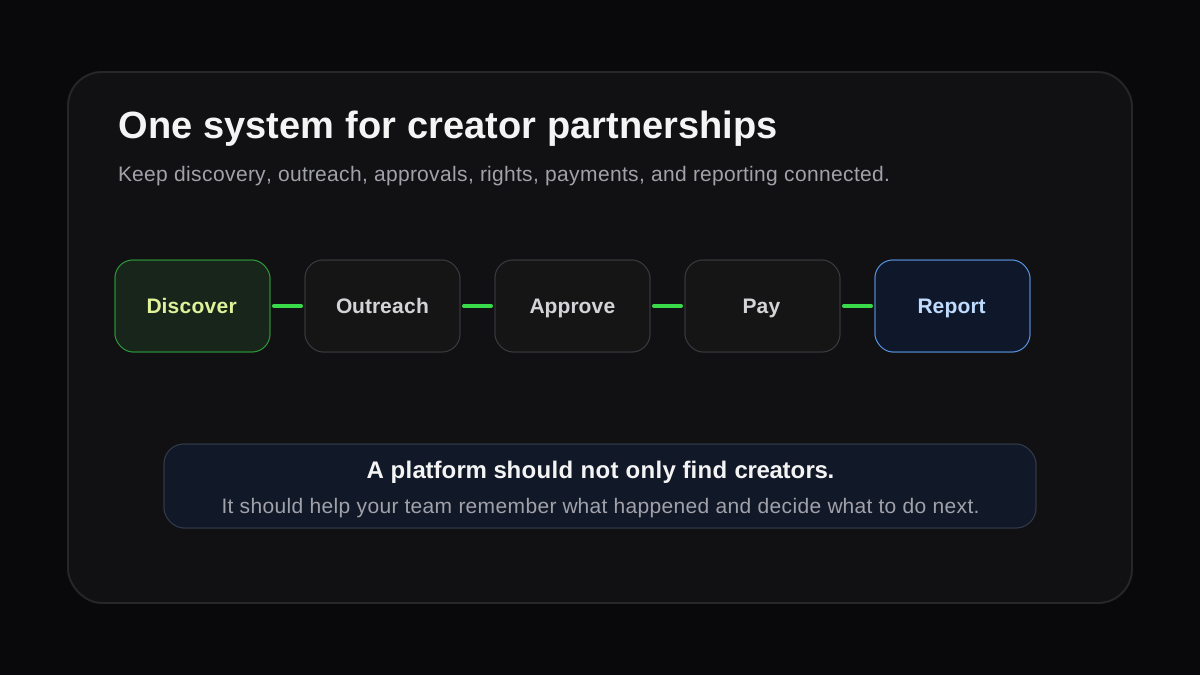
An influencer marketing platform helps brands and agencies run creator partnerships in one system instead of stitching together spreadsheets, inboxes, social screenshots, payment tools, and analytics exports. At minimum, it should support creator discovery, outreach, campaign briefs, content approvals, usage rights, payments, compliance checks, and reporting. The best platforms do more than organize tasks: they preserve the context behind each creator relationship so the next campaign starts smarter.
If a tool only gives you a searchable list of creators, it is closer to a directory or marketplace. If it helps your team move from "who should we work with?" to "what did we learn, who should we renew, and what should we change next?" it is functioning as a real influencer marketing operating system.
Bioby.ai's view is that the platform should not replace human judgment. Creator fit, brand safety, creative taste, negotiation, and relationship quality still need people. The platform's job is to reduce the manual work and memory loss around those decisions, so teams can make better calls with cleaner context.
Creator discovery and matching#
The most visible job of an influencer marketing platform is helping teams find creators. This usually includes filters for platform, location, category, audience, content style, follower range, engagement signals, and sometimes brand safety or fraud indicators.
But discovery is only useful if it leads to better matching. A brand does not need "more influencers." It needs creators whose audience, voice, and trust match the campaign decision. For a product launch, that may mean creators who can explain a new workflow clearly. For a conversion campaign, it may mean creators whose audience already has a buying problem. For an agency, it may mean creators who fit a client's category, market, and approval expectations.
A strong platform should help compare creators on:
- Audience relevance, not just audience size.
- Comment quality and community trust.
- Past content topics and brand partnerships.
- Platform strengths, such as Reels, TikTok, YouTube, livestreams, newsletters, or LinkedIn.
- Potential risk, including brand safety, fake engagement, or category conflict.
- Collaboration history, including reliability and previous campaign outcomes.
This last point is often missing. If your team has worked with a creator before, that history should matter. Did they meet deadlines? Did their audience ask high-intent questions? Did they grant usage rights? Did their content become valuable later in paid social? Bioby.ai would treat that relationship history as part of matching, not as a note buried in someone's inbox.
Outreach and relationship management#
After discovery, the platform should help teams manage outreach. This can include contact records, message history, outreach status, follow-up reminders, creator preferences, negotiation notes, and team visibility.
Influencer marketing is relationship-heavy. A creator may ignore a generic pitch but respond to a brand that understands their content. A platform should make personalization easier, not push teams into robotic bulk outreach. Good outreach management keeps the practical details visible:
- Who contacted the creator.
- What campaign was pitched.
- What rate or package was discussed.
- Whether the creator is interested, unavailable, too expensive, or better suited for a later campaign.
- Which notes matter for future collaborations.
For agencies, this becomes even more important. Multiple clients, creators, campaigns, and team members can create confusion quickly. A platform should prevent duplicate outreach, accidental conflicts, and lost negotiation context.
Campaign briefs and deliverable tracking#
Once a creator is selected, the platform should turn strategy into a usable brief and task flow. A campaign brief usually covers the campaign goal, audience, key message, deliverables, timeline, creative guardrails, disclosure language, tracking links, approval process, and usage rights.
The platform should then track whether the agreed work is actually moving:
- Brief sent.
- Contract agreed.
- Product shipped or account access granted.
- Draft received.
- Revisions requested.
- Final content approved.
- Post live.
- Link and code confirmed.
- Performance captured.
- Payment completed.
This is where platforms become more valuable than spreadsheets. Spreadsheets show a state if someone remembers to update them. A workflow system can show what is waiting, who owns the next action, and where the campaign is at risk.
Content approvals and compliance#
Influencer content often needs review before posting. The approval process may involve brand, creative, legal, compliance, product, and agency stakeholders. Without a clear workflow, teams lose time in scattered comments and creators receive contradictory feedback.
An influencer marketing platform should support:
- Draft uploads.
- Review comments.
- Version history.
- Approval status.
- Final publishing instructions.
- Disclosure checks.
- Claims and brand safety review.
- A record of what was approved and when.
The FTC's Disclosures 101 for Social Media Influencers explains that material connections between creators and brands, such as payment or free products, should be disclosed clearly and conspicuously. The FTC's endorsement guidance also emphasizes that responsibility does not disappear simply because a platform has a disclosure tool. For brands, that means disclosure language should live in the brief, the approval checklist, and the live-post review.
A platform cannot guarantee legal compliance by itself, but it can make compliance much harder to forget.
Usage rights and paid amplification#
Creator content may be used beyond the original organic post. A brand might want to repost it, edit clips, use it on a landing page, include it in email, or run it as paid social. These rights should be negotiated and recorded before the content performs.
Meta explains that partnership ads allow advertisers to run ads with creators, brands, or other partners, with partner and advertiser accounts shown in the ad header. That kind of paid use requires permissions, rights, and coordination. If the platform does not record those details, teams may lose the ability to scale the best-performing content.
A useful platform should track:
- Organic reposting rights.
- Paid usage rights.
- Duration of rights.
- Approved platforms.
- Editing permissions.
- Creator permissions for partnership ads or whitelisting.
- Exclusivity terms.
- Additional fees for expanded usage.
This is not just legal administration. It affects campaign economics. A creator whose organic post performs moderately may still produce an asset that wins as paid creative. If the rights are missing, the campaign loses that upside.
Payments and creator trust#
Payment is part of the creator experience. Delayed or confusing payments damage relationships and make strong creators less likely to work with a brand again.
An influencer marketing platform may support invoices, payout status, payment methods, contract milestones, tax or vendor information, and internal approval routing. For brands and agencies, this creates transparency. For creators, it reduces uncertainty.
The important question is not simply "Can the platform pay creators?" It is "Can the platform connect payment to deliverables and approval status?" A team should be able to see whether a creator is waiting on the brand, waiting on final approval, eligible for payment, already paid, or blocked by missing information.
That visibility matters because relationship health depends on operational reliability.
Reporting and decision support#
Most platforms provide reporting, but useful reporting is not just a dashboard of impressions and engagement. It should help the team decide what to do next.
A strong report connects:
- Creator selection reason.
- Content format.
- Posting date and platform.
- Link, code, or affiliate performance.
- Engagement quality.
- Comments and customer language.
- Usage rights.
- Cost and payment status.
- Operational issues.
- Renewal recommendation.
This helps teams answer: who should we renew, who should we coach, what format should we test again, which audience was strongest, and what workflow issue hurt results?
Many platform comparison articles mention ROI dashboards, creator databases, and workflow tools. Those matter, but they are not enough on their own. Bioby.ai's perspective is that reporting should explain creator performance, not just display it. The context behind a result often lives in the brief, the approval cycle, the audience comments, the creator's past relationship, and the rights agreement.
Marketplace, platform, or agency: what is the difference?#
These terms often blur together.
An influencer marketplace mainly helps brands and creators find each other and transact. It can be useful for one-off collaborations, UGC sourcing, or smaller campaigns.
An influencer marketing platform manages more of the lifecycle: discovery, outreach, campaign workflow, approvals, contracts, payments, rights, and reporting. It is better suited for teams that want repeatable operations and relationship memory.
An agency provides human strategy and execution. Agencies can be helpful when a brand lacks time, category knowledge, or internal staff. Some teams use both: an agency for judgment and execution, plus a platform for visibility, records, and reporting.
The right choice depends on the problem. If your problem is "we cannot find creators," discovery matters most. If your problem is "we lose track of campaigns after outreach," workflow matters most. If your problem is "leadership does not trust influencer marketing results," reporting and attribution matter most. If your problem is "every campaign starts from scratch," relationship history matters most.
How to evaluate an influencer marketing platform#
Before buying or adopting a platform, run a practical test:
- Ask it to find creators in your real niche, not a generic category.
- Review whether audience and comment quality are easy to judge.
- Create a mock brief with disclosure language and usage rights.
- Move a creator through outreach, negotiation, draft approval, and posting stages.
- Record a payment status and content rights note.
- Build a simple report that a marketing leader could understand.
- Export the data and check whether your team can use it elsewhere.
If the platform only looks good in discovery but breaks during approval, payments, or reporting, it may not solve the real problem. If it produces attractive dashboards but cannot explain why a creator worked, it will not improve future decisions.
Where Bioby.ai fits#
Bioby.ai should be evaluated less as a creator list and more as a collaboration system. The important promise is not "find more creators faster." It is "help teams choose better creators, manage the campaign without losing context, and turn each result into better future matching."
That means the product point of view is:
- AI can help narrow creator options, but humans still judge fit.
- Campaign workflow should be visible from outreach to payment.
- Approval and rights should be part of execution, not afterthoughts.
- Reports should connect numbers with relationship context.
- Past collaborations should improve future recommendations.
This is what separates a platform from a spreadsheet replacement. The goal is not simply automation. The goal is a more reliable creator partnership workflow.
Final takeaway#
An influencer marketing platform should help brands and agencies discover creators, manage outreach, run campaign workflows, approve content, track rights, pay creators, monitor compliance, and report results. But the deeper value is memory: keeping the creator relationship, operational context, and performance outcome connected.
When that context stays intact, influencer marketing becomes less dependent on scattered screenshots and individual memory. Teams can renew the right creators, improve briefs, negotiate rights earlier, pay partners reliably, and make better decisions after every campaign.
Continue this topic path#
This article is part of the same topic path. Useful next reads:
- How to Build an Influencer Marketing Strategy That Improves Every Campaign
- How Much Does Influencer Marketing Cost? Budget Beyond Creator Fees
- How to Track Influencer Marketing Campaigns Without Losing Creator Context
- How to Measure Influencer Marketing ROI Without Trusting One Number
Sources#
Related Articles
How to Build an Influencer Marketing Strategy That Improves Every Campaign
9 min read
A practical guide for brands building influencer marketing strategy around creator fit, briefs, approvals, usage rights, tracking, and repeatable learning.
Read article →How Much Does Influencer Marketing Cost? Budget Beyond Creator Fees
8 min read
A practical influencer marketing budget guide for brands and agencies covering creator fees, usage rights, product seeding, amplification, team time, and campaign learning.
Read article →How to Track Influencer Marketing Campaigns Without Losing Creator Context
11 min read
A practical guide to tracking influencer campaigns with clean links, creator records, approvals, reporting cadence, and Bioby.ai workflow context.
Read article →How to Measure Influencer Marketing ROI Without Trusting One Number
8 min read
A practical guide to influencer marketing ROI measurement using links, promo codes, surveys, cost definitions, creator scorecards, and decision-ready reporting.
Read article →