
How to Build an Influencer Marketing Strategy That Improves Every Campaign
A practical guide for brands building influencer marketing strategy around creator fit, briefs, approvals, usage rights, tracking, and repeatable learning.
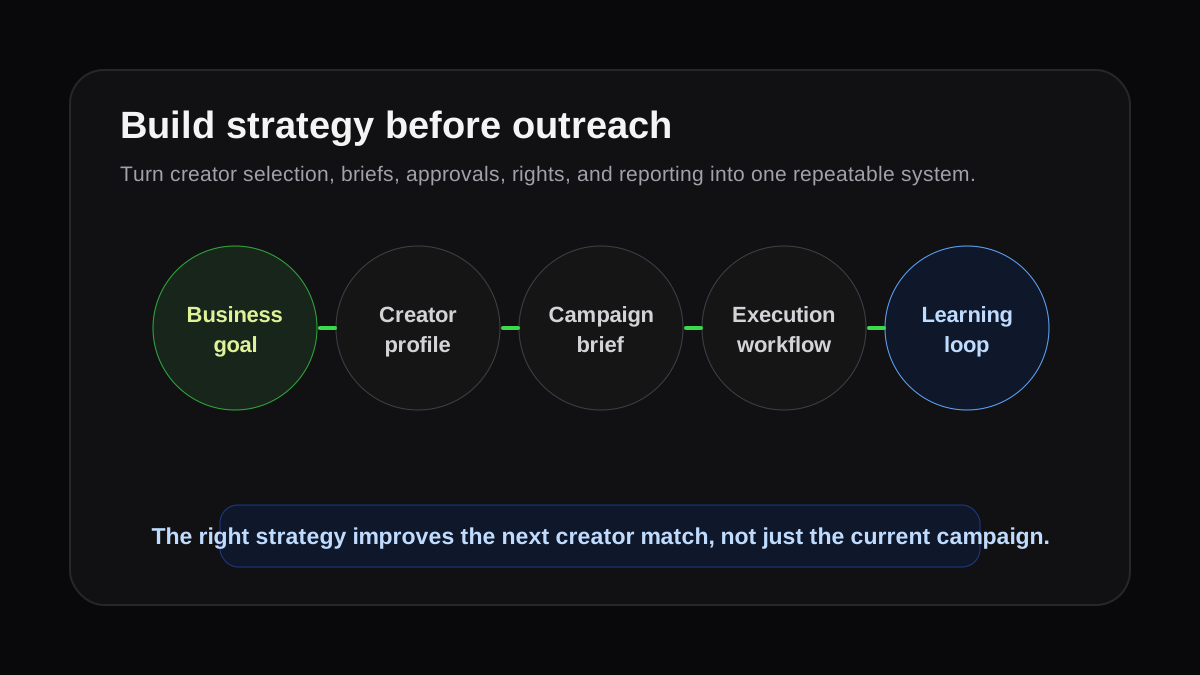
An influencer marketing strategy is the operating plan that connects a business goal to the right creators, the right offer, the right content workflow, and the right measurement plan. It should answer five questions before outreach starts: what are we trying to change, who must believe us, which creators can credibly reach them, what should the creators be free to interpret, and how will the campaign teach us what to do next?
Many brands treat strategy as a list of creators and posting dates. That is not enough. The strategy has to define the creator profile, approval workflow, usage rights, tracking setup, disclosure requirements, and reporting cadence. Otherwise the team may still publish content, but every campaign starts from zero.
Bioby.ai's view is that influencer strategy should become a learning system. Each campaign should improve the next creator match, brief, negotiation, and budget decision. If your team cannot explain why a creator was selected, what they were asked to do, which rights were secured, and what the post taught you, the strategy is not yet operational.
Start with the business change, not the creator list#
Before you search for creators, write the business change the campaign is meant to create. "Work with influencers" is not a strategy. "Drive qualified trial signups from operations managers who are frustrated with manual creator outreach" is closer to one.
The goal determines every downstream decision. A product launch may need credible explainers who can make a new category understandable. A conversion campaign may need creators whose audience has high buying intent and trusts direct recommendations. A retention or loyalty campaign may need existing customers who can show long-term usage, not polished one-time reviews.
Use one primary objective and two or three supporting signals. For example:
- Primary objective: qualified trials from creator-led traffic.
- Supporting signals: landing-page engagement, comment quality, and post-purchase survey mentions.
- Decision after campaign: scale the creator segment, revise the offer, or change the content format.
This keeps the campaign from becoming a metric buffet. It also gives creators more useful direction. A creator can make better content when they know the campaign is about qualified leads, product education, or social proof rather than a vague request to "create awareness."
Define the ideal creator profile#
The ideal creator profile should describe the kind of person whose audience, voice, trust, and content format match the campaign. It is more useful than a follower-count range.
Include:
- Audience fit: who follows them and whether those people match the buyer or user.
- Problem relevance: whether the creator naturally talks about the pain point your product solves.
- Content behavior: whether they teach, review, compare, entertain, narrate, or demonstrate.
- Trust signal: comment quality, community memory, repeat questions, and audience responsiveness.
- Brand safety: past partnerships, claims, tone, controversial topics, and category conflicts.
- Collaboration reliability: response speed, draft quality, revision behavior, and deadline history.
- Rights potential: whether their content could be reused in paid social, landing pages, or sales enablement.
Competitor guides often recommend engagement rate and audience demographics, and those are useful inputs. But Bioby.ai would add one more layer: creator memory. If a creator has worked with you before, the system should remember what happened. Did their audience ask informed questions? Did they need heavy editing? Did they grant usage rights? Did they convert immediately, or did their content become valuable later as paid creative? That history should shape the next shortlist.
Choose creators for the decision you need to make#
Different campaign questions require different creators. A broad launch campaign may need several creator archetypes so the team can learn which explanation resonates. A performance campaign may need fewer creators with stronger audience fit and cleaner tracking. A category education campaign may need deeper subject-matter creators who can handle nuance.
Avoid building the whole plan around the most visible creators in the niche. A large creator can generate reach, but reach does not automatically create trust, explanation, or action. Nano and micro creators can sometimes reveal stronger customer language because their audiences ask practical questions in comments. Larger creators can be useful for visibility or credibility, but the strategy should explain why size matters for this particular goal.
A practical selection model is:
- Build a longlist based on topic, audience, and content format.
- Remove creators with audience mismatch, low comment quality, obvious brand safety issues, or category conflict.
- Score the shortlist against the campaign decision, not a generic creator score.
- Reserve budget for at least one controlled learning test, such as two creative formats or two audience segments.
- Record why each creator was selected so reporting can compare the hypothesis to the outcome.
That last step is easy to skip and expensive to lose. If you do not record the selection reason, the post-campaign report becomes a leaderboard instead of a learning loop.
Build the brief around clarity and creative freedom#
A strong influencer brief gives creators direction without turning them into ad readers. It should define the campaign goal, audience, core message, non-negotiables, deliverables, timeline, claims, disclosure requirements, and approval process. It should also explain why the creator was chosen.
Creators do better work when they understand the strategic role of the content. A brief that says "make one Reel about our product" is weak. A brief that says "your audience is already asking how small teams manage creator outreach; show the moment where manual follow-up breaks down and explain how a structured workflow prevents dropped deals" gives the creator a real angle.
Include these sections:
- Campaign context: why the campaign matters now.
- Audience: who the content should help.
- Creator role: why this creator's voice is a good fit.
- Message hierarchy: one main point and two supporting proof points.
- Creative room: examples of acceptable formats without forcing the final script.
- Non-negotiables: claims, disclosure, competitor mentions, brand safety, and legal limits.
- Deliverables: formats, dates, draft expectations, and final posting window.
- Tracking: links, codes, landing pages, and naming rules.
- Usage rights: whether the brand can repost, run paid ads, edit clips, or use content in other channels.
- Approval workflow: who reviews, how fast feedback comes back, and how many revisions are included.
The Federal Trade Commission's Disclosures 101 for Social Media Influencers says material connections such as payments, free products, or discounted products should be disclosed clearly and conspicuously. That requirement should be in the brief before content is created, not added after the draft is ready.
Treat usage rights as strategy, not paperwork#
Influencer content often becomes more valuable after the organic post. A clear product demo might become a paid social ad. A strong testimonial might help a landing page. A founder-style explanation might support sales enablement. If rights are negotiated too late, the brand may not be able to use the best asset when it matters.
Plan usage rights before the campaign launches:
- Organic reposting rights.
- Paid amplification rights.
- Duration of use.
- Platforms where the content can be used.
- Editing permissions.
- Whitelisting or partnership ad permissions.
- Exclusivity windows.
- Creator compensation for expanded usage.
Meta's Business Help Center explains that partnership ads allow advertisers to run ads with creators, brands, or other partners, with partner and advertiser accounts featured in the ad header. That means usage rights and permissions are not a side note. They directly affect whether influencer content can move from organic performance into paid distribution.
For Bioby.ai users, rights should live inside the campaign record next to the creator, deliverables, approvals, and results. A strategy cannot scale if the team has to search contracts and email threads every time a post performs well.
Set up measurement before posts go live#
Measurement is part of strategy, not the final step. Decide what success means, which conversion or behavior will be tracked, and what attribution caveats leadership should understand before content goes live.
At minimum, prepare:
- One campaign naming convention.
- One tracked link per creator or deliverable where links are possible.
- Creator-specific codes where relevant.
- Landing pages that match the creator's message.
- A reporting owner.
- A post-publish check for broken links, missing disclosures, and incorrect tags.
- A post-campaign window for delayed conversions or longer consideration cycles.
Google Analytics documentation recommends using campaign parameters such as utm_source, utm_medium, and utm_campaign so teams can see which campaigns refer traffic in acquisition reports. For influencer campaigns, the naming convention should be simple enough for the whole team to follow and specific enough to distinguish creator, platform, campaign, and content format.
Do not measure only the easiest thing to count. Reach and engagement can be useful, but they rarely explain the full value of a creator partnership. Track qualitative signals too: what objections appeared in comments, which product language customers repeated, which content made the offer easier to understand, and which creators were reliable enough to renew.
Create a campaign workflow that protects momentum#
Many influencer strategies fail during execution, not planning. Creators are selected, but products ship late. The brief is approved, but legal feedback arrives after the posting window. Links are generated, but nobody tests them on mobile. Payment terms are agreed, but the team loses track of invoice status. These operational gaps affect performance.
Use a workflow that covers:
- Creator shortlist approved.
- Outreach sent.
- Terms negotiated.
- Contract and rights confirmed.
- Brief delivered.
- Product shipped or access granted.
- Draft received.
- Brand review completed.
- Compliance review completed.
- Link and code tested.
- Content posted.
- Performance captured.
- Payment completed.
- Renewal decision recorded.
This is where Bioby.ai's product perspective matters. The tool should not simply help a team find creators. It should help the team keep the campaign moving, preserve relationship history, and make the next decision easier. Strategy becomes durable when the workflow records what happened.
Report learning back into the next strategy#
The end of a campaign should not be the end of the strategy. It should update the system.
After every campaign, answer:
- Which creator profile performed best, and why?
- Which creators produced strong business outcomes but difficult workflows?
- Which content formats created useful customer language?
- Which claims, hooks, or offers caused confusion?
- Which rights should have been negotiated earlier?
- Which audience segment deserves the next test?
- Which creator should be renewed, coached, or paused?
This feedback is what turns influencer marketing from disconnected campaigns into a repeatable partnership engine. If the learning stays in a deck that nobody reads again, the next campaign will repeat the same mistakes. If it is stored in creator records and campaign workflows, the next campaign starts smarter.
Final takeaway#
To build an influencer marketing strategy, start with the business decision, define the ideal creator profile, create a brief that gives clarity and creative freedom, negotiate rights before content performs, set up measurement before posting, and feed campaign learning back into the next shortlist.
The goal is not just to publish more creator content. The goal is to build a system where every creator partnership teaches the brand how to choose better, brief better, execute faster, and report with more confidence.
Continue this topic path#
This article is part of the same topic path. Useful next reads:
- What Does an Influencer Marketing Platform Do?
- How Much Does Influencer Marketing Cost? Budget Beyond Creator Fees
- How to Track Influencer Marketing Campaigns Without Losing Creator Context
- How to Measure Influencer Marketing ROI Without Trusting One Number
Sources#
Related Articles
What Does an Influencer Marketing Platform Do?
9 min read
A practical explanation of what influencer marketing platforms should help brands and agencies do across creator discovery, outreach, approvals, payments, rights, and reporting.
Read article →How Much Does Influencer Marketing Cost? Budget Beyond Creator Fees
8 min read
A practical influencer marketing budget guide for brands and agencies covering creator fees, usage rights, product seeding, amplification, team time, and campaign learning.
Read article →How to Track Influencer Marketing Campaigns Without Losing Creator Context
11 min read
A practical guide to tracking influencer campaigns with clean links, creator records, approvals, reporting cadence, and Bioby.ai workflow context.
Read article →