
UGC vs Influencer Marketing: Which One Should Your Brand Use?
A practical comparison of UGC and influencer marketing across content assets, audience access, usage rights, paid distribution, measurement, and creator workflow.
UGC and influencer marketing both use creator content, but they buy different things. UGC usually buys content assets: product demos, reviews, unboxings, testimonials, tutorials, or customer-style videos that the brand distributes through ads, landing pages, email, or owned social channels. Influencer marketing buys access to a creator's audience, trust, and endorsement context. The content appears on the creator's own channel and carries the weight of that relationship.
The decision is not whether UGC is better than influencer marketing. The decision is what the brand needs right now: more content, more reach, more trust, more conversion assets, or a long-term creator relationship. Bioby.ai's view is that UGC and influencer marketing should not be managed as disconnected programs. They should share creator records, usage-rights records, content performance, and campaign learning.
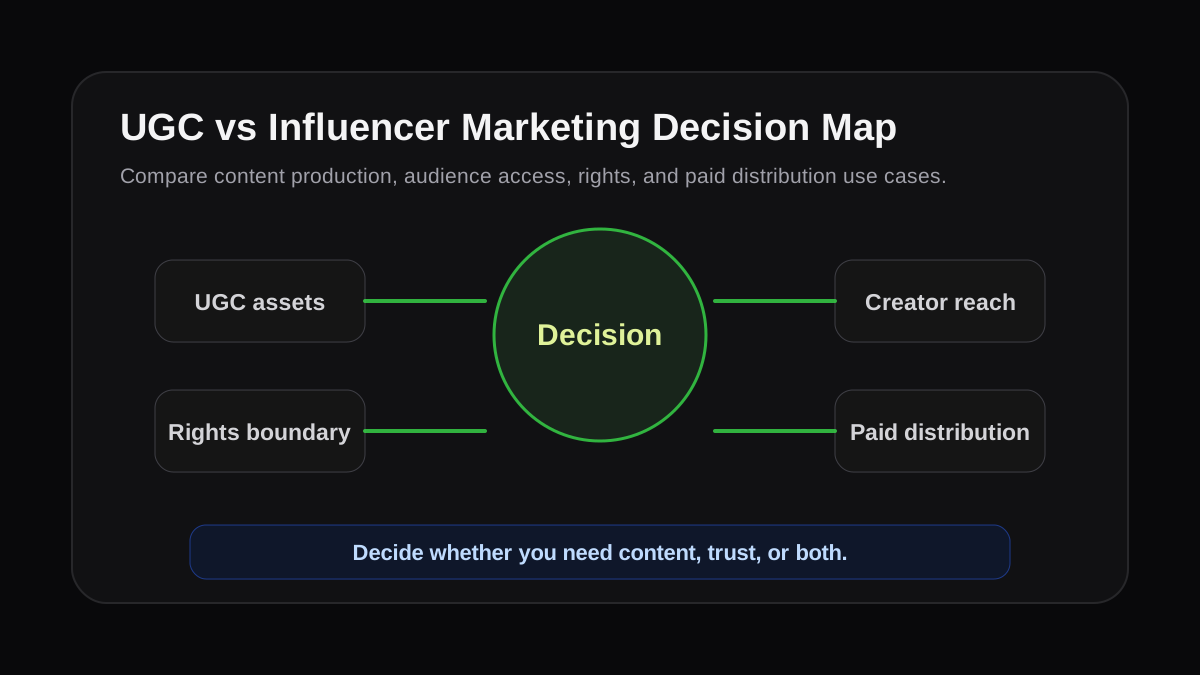
The core difference: content or audience#
UGC creators are usually hired for the content itself. They may not have a large audience, and they may not post the asset on their own channels. Their job is to produce believable, useful content that the brand can distribute.
Influencers are hired for audience access and trust. They publish to their own followers, and the recommendation is valuable because it comes from someone the audience already knows.
Brighter Click and House of Marketers make the same distinction: UGC is closer to content production and brand distribution, while influencer marketing is closer to audience reach and borrowed credibility. That difference changes budget, contracts, approvals, rights, and measurement.
Rights and publishing control are different#
In a UGC project, the brand often wants broad rights to edit and use the content across paid ads, product pages, email, and social posts. The agreement should specify platforms, duration, editing rights, ad usage, and whether the asset can be used internationally.
In an influencer partnership, the creator usually owns the channel and the original post. Paid usage, whitelisting, Spark Ads, partnership ads, and long-term reuse must be negotiated separately. Many brands assume they can use influencer content like UGC, only to discover that the top-performing asset cannot be scaled.
This is why Bioby.ai should track asset rights at the content level. A team needs to know whether an asset is a UGC deliverable, an organic influencer post, or a paid-amplification-ready creator asset.
When UGC is the better choice#
UGC is stronger when the brand needs content volume, paid ad tests, landing-page proof, product-page demos, or fast creative iteration. If your team wants to test ten hooks, five pain points, and several calls to action, UGC creators can produce multiple assets faster than most influencer partnerships.
The risk is quality. Bad UGC looks staged, scripted, or fake. A brief should give context and guardrails without turning the creator into an actor reading brand copy. Claims, disclosures, and usage rights still need review.
UGC should be measured like creative: which asset improves conversion, which hook holds attention, which version supports the landing page, and which creative can keep running without fatigue.
When influencer marketing is the better choice#
Influencer marketing is stronger when the brand needs entry into a new audience, category trust, product education, launch momentum, or community feedback. The creator's value is not only the asset. It is the fact that this person is saying this thing to this audience.
A B2B SaaS brand may benefit more from a niche operator who regularly discusses workflow pain than from a generic high-reach creator. A skincare launch may need someone who can explain skin type and routine context, not just produce a clean unboxing video.
The tradeoff is operational complexity. Influencer campaigns usually take longer, cost more, and require more relationship management. Teams need to preserve why the creator was chosen, what the audience said, and whether the relationship should continue.
Contracts should separate deliverables#
A single creator may produce both UGC assets and influencer posts. The contract should separate them. For UGC, define the number of assets, format, duration, usage rights, editing rights, revision rounds, and ad permissions. For influencer posts, define platform, posting date, caption requirements, disclosure, link or code, and paid amplification rights.
If everything is described as "creator content," disputes become likely. Can the brand cut the video into ads? Can the creator delete the post? Can the content run in another market? These questions should be answered before the asset is delivered.
Use funnel position to choose#
If the problem is upper-funnel trust, launch awareness, or category education, influencer marketing usually fits better. If the problem is creative fatigue, weak product-page proof, or paid social conversion, UGC usually fits better.
The strongest programs connect both. Use influencer marketing to discover credible narratives and real audience objections. Turn the strongest themes into UGC briefs. Test those assets in paid channels. Feed results back into the next creator shortlist.
Bioby.ai's role is to keep that learning connected. The team should know which creator produced which asset, where the asset can be used, how it performed, and whether the relationship deserves renewal.
The team workflow should be different#
UGC projects often look more like creative production. The core workflow is brief, asset list, draft, revision, rights confirmation, delivery, tagging, and paid-media testing. The stakeholders are often growth, creative, paid social, ecommerce, and brand.
Influencer campaigns look more like relationship operations. The workflow includes creator selection, outreach, negotiation, brief, product shipment, draft review, disclosure check, posting, community monitoring, payment, reporting, and renewal. The stakeholders often include brand, PR, legal, customer support, sales, and agency teams.
If both workflows are managed in the same spreadsheet without distinction, the team loses clarity. UGC needs an asset library and usage-rights tracking. Influencer marketing needs relationship history and audience-response notes. Bioby.ai should make those differences visible while still connecting them inside one creator system.
Do not treat UGC as cheap influencer marketing#
One common mistake is expecting UGC creators to provide reach and endorsement without paying for distribution. If the asset runs from the brand account, the brand owns the distribution problem. The creator's value is the asset, not a guaranteed audience.
The opposite mistake is treating influencers like content vendors. If the creator's relationship with the audience is the reason you hired them, over-controlling the script can destroy the value. The brief should define the outcome, claims, offer, and guardrails, but leave enough room for the creator's own language.
A useful planning question is: are we buying content, audience trust, or both? If both, separate the deliverables and rights. A creator may deliver three UGC videos for brand use and one organic post on their channel. Those are different products and should be priced, approved, and measured differently.
Measurement should follow distribution#
UGC distributed through paid channels should be measured like creative: hook performance, landing-page quality, conversion, fatigue, and reuse. Influencer posts should be measured like partnerships: audience fit, trust, comment quality, clicks, codes, survey mentions, rights, and renewal potential.
When teams use one generic dashboard for both, they either undervalue UGC because it has no native audience or undervalue influencers because not every influence becomes a clean click. The measurement system should match the job.
Use both when the campaign needs learning and scale#
A product launch may need influencers first, because the brand needs to learn which explanations resonate with a real community. Once those comments reveal the strongest pain points, UGC can turn the learning into many creative variants. A performance campaign may start the other way: test UGC hooks in paid media, then recruit influencers who naturally speak to the winning angle.
The sequence matters. If the brand starts with UGC without understanding audience language, the assets may feel generic. If the brand starts with influencers but never turns the learning into reusable content, the campaign may create buzz without improving the performance engine. Bioby.ai should help teams move insights from one format to the other.
Watch the compliance and disclosure boundary#
Both UGC and influencer content need disclosure when there is a material brand relationship, but the execution is different. In influencer marketing, the creator controls the post and should use the platform's branded content tools or clear disclosure language. In UGC for ads, the brand often controls the final ad unit, so the brand has more responsibility for how claims and disclosures appear.
That means rights tracking is not only a creative issue. It is also a compliance issue. If a brand edits a creator testimonial into a paid ad, the team should know whether the claim is approved, whether disclosure is visible, and whether platform permissions are still active.
Final takeaway#
UGC and influencer marketing are not substitutes. UGC is best for content assets, creative testing, and conversion support. Influencer marketing is best for audience trust, storytelling, launches, and relationship-driven reach.
The best creator programs manage both inside one operating system. They record rights, distribution, performance, and relationship context so each asset improves the next campaign.
Continue this topic path#
This article is part of the same topic path. Useful next reads:
- What Does an Influencer Marketing Platform Do?
- How to Build an Influencer Marketing Strategy That Improves Every Campaign
- How Much Does Influencer Marketing Cost? Budget Beyond Creator Fees
- How to Track Influencer Marketing Campaigns Without Losing Creator Context
Sources#
Related Articles
What Does an Influencer Marketing Platform Do?
9 min read
A practical explanation of what influencer marketing platforms should help brands and agencies do across creator discovery, outreach, approvals, payments, rights, and reporting.
Read article →How to Build an Influencer Marketing Strategy That Improves Every Campaign
9 min read
A practical guide for brands building influencer marketing strategy around creator fit, briefs, approvals, usage rights, tracking, and repeatable learning.
Read article →How Much Does Influencer Marketing Cost? Budget Beyond Creator Fees
8 min read
A practical influencer marketing budget guide for brands and agencies covering creator fees, usage rights, product seeding, amplification, team time, and campaign learning.
Read article →