
How to Build an Influencer Marketing Report for Leadership
A practical leadership reporting playbook for influencer campaigns, with business outcomes, creator context, risk signals, and Bioby.ai workflow guidance.
An influencer marketing report for leadership should answer one question quickly: what decision should the company make next? The report should not be a screenshot dump from Instagram, TikTok, Shopify, Google Analytics, and a spreadsheet. It should connect campaign spend, business outcome, creator quality, operational risk, and the next budget move in a format a leadership team can read in five minutes.
The best version has two layers. The first is a one-page executive view with the campaign goal, spend, outcome, status, and recommendation. The second is a diagnostic appendix for the marketing team: creator-by-creator performance, content notes, attribution assumptions, approval issues, disclosure checks, usage rights, and renewal recommendations. Leadership needs the first layer. Your team needs the second layer so the first layer is defensible.
Bioby.ai's view is simple: influencer reporting should preserve the relationship and workflow context behind the numbers. A creator is not just a row with reach, clicks, and sales. They are a partner with a selection reason, audience fit, brief, contract terms, content rights, approval timeline, and collaboration history. When those details disappear, leadership can only ask for cheaper creators or bigger reach. When the context stays attached, the conversation becomes smarter: which creator archetype should we scale, which workflow bottleneck hurt results, and which partner deserves a longer-term deal?
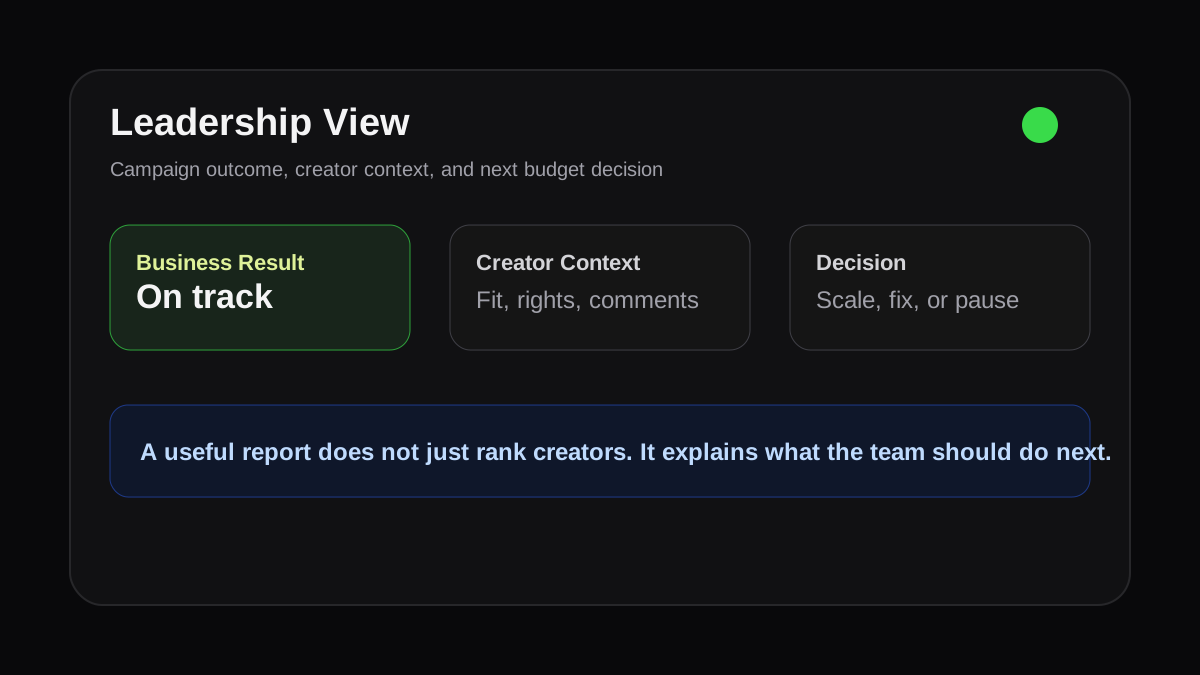
Start with the leadership decision#
Before building slides, define the decision the report must support. Most influencer reports fail because they start with available metrics instead of a business question. Leadership is usually trying to decide one of five things:
- Should we increase, hold, or reduce influencer marketing budget?
- Which creator segment should receive more investment next month?
- Did the campaign support a launch, revenue target, waitlist, retail push, or awareness goal?
- Which risk needs attention before the next campaign: tracking, approvals, disclosure, content quality, or partner reliability?
- Should influencer marketing stay as a campaign tactic or become an always-on creator program?
Once the decision is clear, the report becomes much easier to structure. A product launch report may emphasize audience learning, content resonance, comment themes, and creator explanations of the product. A direct-response report may emphasize attributed revenue, CPA, conversion rate, refund signals, and customer quality. A brand trust campaign may emphasize reach quality, saves, sentiment, creator credibility, and how the content can be reused.
Do not force every campaign into the same success metric. Influencer marketing spans awareness, consideration, community, commerce, and relationship building. A leadership report should be honest about which job the campaign was hired to do.
Use a one-page executive summary#
The executive summary should fit on one page and use plain business language. It should include:
- Campaign name, date range, market, and business objective.
- Total committed spend, including creator fees, product cost, shipping, agency or team time if material, paid amplification, and tooling.
- Primary outcome against target, such as revenue, qualified leads, trials, traffic quality, retail lift, waitlist signups, or launch learning.
- Status: on track, needs attention, or off track.
- Three findings that explain the outcome.
- One recommended next action.
This is where many reports get too dense. Leadership does not need every creator's engagement rate on the first page. They need the business result and the interpretation. For example: "The campaign beat the trial target by 18%, but two of the top three creators succeeded because they explained the workflow problem in depth, not because they had the largest audiences. Recommendation: shift the next wave toward niche operators with educational content formats and secure paid usage rights upfront."
That type of statement helps budget owners act. A metric list does not.
Separate outcome metrics from diagnostic metrics#
A leadership report needs both outcome metrics and diagnostic metrics, but they should not be mixed together.
Outcome metrics show whether the campaign achieved the business goal. Depending on the campaign, they may include revenue, qualified leads, trials, signups, retail actions, pipeline influence, cost per acquisition, return on ad spend, or repeat purchase behavior.
Diagnostic metrics explain why the outcome happened. These may include reach, impressions, engagement rate, saves, comments, click-through rate, landing-page behavior, content completion, code redemptions, audience match, sentiment, creator responsiveness, approval cycle time, and content rights.
Superfiliate's campaign reporting guidance makes a similar point: upper-funnel metrics such as reach and engagement should be read alongside mid- and lower-funnel signals such as clicks, conversions, and revenue, and reports should turn the data into action rather than leaving stakeholders to interpret raw numbers. Google also notes that UTM parameters let teams identify which campaigns refer traffic when custom campaign URLs are used, but those parameters are only useful when naming is consistent and the team can interpret the results inside the broader campaign context.
For Bioby.ai, this distinction matters because diagnostic context often lives outside the analytics platform. Google Analytics can show that a creator drove fewer sessions than expected. It will not tell you that the creator posted late because product shipment was delayed, that the brief was unclear, that the best comment thread revealed a new product objection, or that the creator's content produced a strong paid social asset even if organic clicks were average.
Build the creator scorecard around future decisions#
A useful creator scorecard should answer: renew, scale, coach, renegotiate, or stop?
Include business performance, but do not stop there. Add the context that explains whether the performance is repeatable:
- Selection reason: why this creator was chosen.
- Audience fit: who they reach and whether that matches the buyer or user.
- Content format: tutorial, review, founder interview, demo, comparison, unboxing, livestream, or affiliate content.
- Offer and link setup: unique link, code, landing page, and any tracking caveats.
- Approval reliability: on-time delivery, revision quality, disclosure compliance, and communication speed.
- Content rights: organic only, paid usage, whitelisting, affiliate rights, or exclusivity restrictions.
- Qualitative signal: comment quality, objections surfaced, customer language, creator feedback, and brand safety notes.
- Next action: renew, test another format, negotiate usage rights, move to affiliate, pause, or archive.
This is one of the strongest places for Bioby.ai to add value. If the platform records the creator relationship from discovery through outreach, briefing, approval, posting, payment, and reporting, the scorecard can explain performance instead of merely ranking it.
Show tracking assumptions, not just tracking numbers#
Influencer attribution is never perfect. People watch a video, search later, share links in DMs, use a code after seeing multiple creators, or buy through a marketplace that hides the original touchpoint. A credible leadership report should say what the tracking can and cannot prove.
At a minimum, document:
- The primary conversion event.
- The attribution window.
- The UTM naming pattern.
- Whether each creator had a unique link, promo code, affiliate link, or shop link.
- Whether links were tested before posting.
- Which platforms have incomplete data.
- How code leakage, dark social, marketplace sales, or paid amplification may affect the result.
Google's Analytics help documentation recommends using campaign parameters such as utm_source, utm_medium, and utm_campaign so campaign traffic can appear in acquisition reports. For influencer programs, that guidance should become an operating habit: create one naming convention, generate one tracked link per creator or asset, test the links on mobile, and keep the final URL connected to the creator record.
If leadership sees only a single ROI number, they may treat it as absolute truth. If they see the number plus the attribution notes, they can make a better decision. A report can say, "Last-click revenue was below target, but code redemptions and post-purchase survey mentions suggest creators influenced demand that converted later through search and direct traffic." That is not an excuse. It is an honest measurement note.
Include compliance and brand risk as reportable signals#
Influencer reporting should include compliance because disclosure issues are not just legal concerns; they are workflow signals. If three creators buried disclosures, posted without approval, or used claims the legal team did not clear, the report should surface that before the next campaign.
The Federal Trade Commission's Disclosures 101 for Social Media Influencers explains that material connections such as payment, free products, employment, family relationships, or discounted products should be disclosed clearly and conspicuously. It also warns that disclosures can be missed if they appear only in profiles, at the end of posts, behind "more," or mixed into a group of hashtags.
For leadership, the useful report line is not "FTC checked." It is more specific: "Disclosure compliance was complete for 18 of 20 deliverables. Two Reels required correction because #ad was placed after the fold. Next campaign should require disclosure language in the pre-approval checklist and final caption review." That turns risk into a process fix.
Add the operating story#
Numbers show performance. The operating story shows whether the team can repeat it.
Add a short section called "What affected the result." This should include workflow factors that changed the campaign outcome:
- Creator sourcing quality: Did the selected creators match the audience and message?
- Brief quality: Did creators understand the product, audience, claims, and offer?
- Approval speed: Did internal review slow posting or weaken creative timing?
- Asset readiness: Were product samples, landing pages, codes, and tracking links ready before the posting window?
- Content rights: Can the best assets be reused in paid social, email, landing pages, or sales enablement?
- Payment and renewal status: Are strong partners already paid and ready for the next wave?
This section is where the report becomes useful to operators. If the best-performing creator waited eight days for approval, leadership should know that faster approvals may be a growth lever. If the highest-reach creator produced weak comments while a smaller creator drove high-intent questions, leadership should know the program should optimize for audience fit, not size.
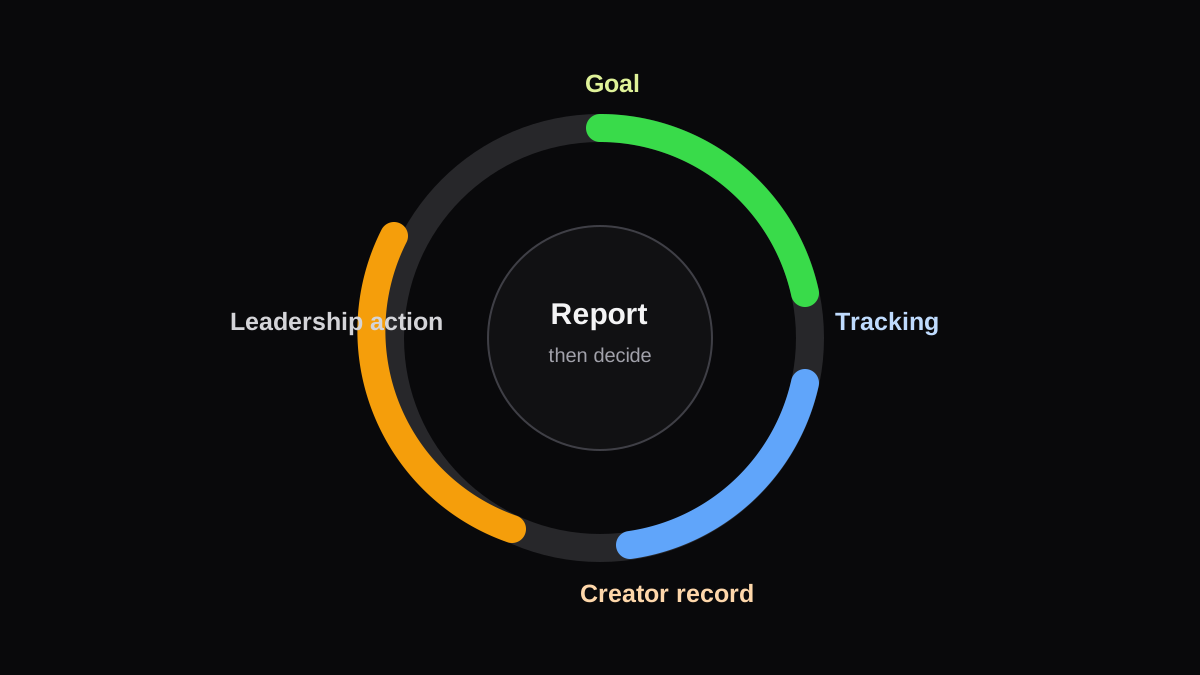
Recommend the next budget move#
Every leadership report should end with a decision recommendation. Avoid vague endings such as "continue monitoring" or "optimize performance." Be specific:
- Scale: increase spend on a creator segment, format, audience, or offer.
- Fix: keep the strategy but improve tracking, approval speed, brief clarity, disclosure review, or landing-page fit.
- Retest: rerun the campaign with a tighter creator profile, stronger offer, or different content format.
- Pause: stop spend until the measurement setup, product readiness, or partner fit improves.
- Renew: move high-performing creators into a longer-term partnership, ambassador program, affiliate model, or paid usage agreement.
Leadership does not need every nuance, but it does need the tradeoff. For example: "Scale educational micro-creators in the productivity niche, but only if paid usage rights are negotiated before posting. The strongest organic posts were also the best paid ad candidates, and rights were not secured for two of them." That recommendation connects performance, legal/commercial terms, and next budget action.
A simple report structure Bioby.ai teams can use#
Use this structure for a recurring leadership report:
- Executive answer: what happened, whether it met the goal, and what to do next.
- Business outcome: spend, target, actual result, and status.
- Creator insight: which creator types worked and why.
- Tracking note: attribution method, caveats, and confidence level.
- Operational note: approval, disclosure, shipping, rights, payment, or workflow issues.
- Next action: budget move, creator renewal plan, and process improvement.
- Appendix: creator scorecards, links, codes, screenshots, content rights, and source data.
Bioby.ai should make this easier by keeping the report connected to the campaign record. The report should not require someone to rebuild the campaign from Slack threads, spreadsheets, email approvals, shipping updates, and social screenshots. If the creator record already contains the brief, reason for selection, terms, deliverables, approvals, tracking links, post URLs, content rights, payment status, and notes, the report can be generated from reality rather than memory.
Final takeaway#
An influencer marketing report for leadership is not a vanity metrics deck. It is a decision document. It should tell the company whether the campaign worked, why it worked or failed, what risk or workflow issue affected the result, and where the next dollar should go.
The stronger your creator records are, the stronger your leadership reporting becomes. Clean tracking explains the outcome. Creator context explains the cause. Workflow history explains what to fix. Together, they turn influencer marketing from an isolated campaign recap into a repeatable operating system for partnerships.
Continue this topic path#
This article is part of the same topic path. Useful next reads:
- What Does an Influencer Marketing Platform Do?
- How to Build an Influencer Marketing Strategy That Improves Every Campaign
- How Much Does Influencer Marketing Cost? Budget Beyond Creator Fees
- How to Track Influencer Marketing Campaigns Without Losing Creator Context
Sources#
Related Articles
What Does an Influencer Marketing Platform Do?
9 min read
A practical explanation of what influencer marketing platforms should help brands and agencies do across creator discovery, outreach, approvals, payments, rights, and reporting.
Read article →How to Build an Influencer Marketing Strategy That Improves Every Campaign
9 min read
A practical guide for brands building influencer marketing strategy around creator fit, briefs, approvals, usage rights, tracking, and repeatable learning.
Read article →How Much Does Influencer Marketing Cost? Budget Beyond Creator Fees
8 min read
A practical influencer marketing budget guide for brands and agencies covering creator fees, usage rights, product seeding, amplification, team time, and campaign learning.
Read article →