
How to Blend Influencer Marketing With Affiliate Programs
A practical guide to hybrid creator partnerships using fixed fees, commissions, tracking links, promo codes, attribution rules, payouts, and renewal decisions.
Blending influencer marketing with an affiliate program means designing a fair hybrid partnership: the brand pays a base fee for the creator's labor and audience trust, then adds performance commissions for measurable outcomes such as purchases, qualified trials, or first payments. The goal is not to force every creator into a pure commission model. The goal is to align incentives without devaluing content work.
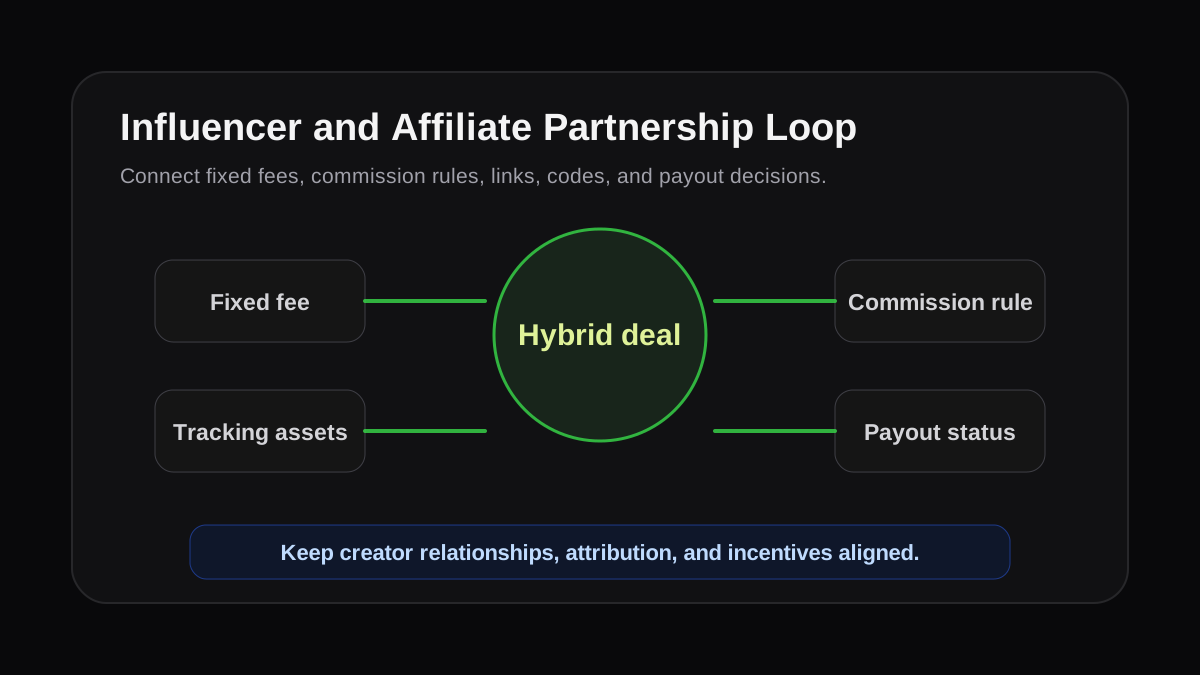
Traditional influencer campaigns focus on content and influence. Affiliate programs focus on trackable results. A hybrid model can combine creator authenticity with performance accountability. Bioby.ai's view is that this only works when creator relationship history, tracking assets, commission rules, payout status, and renewal decisions live in one workflow.
Choose creators who fit hybrid partnerships#
Not every influencer should become an affiliate. Hybrid programs work best when creators have a clear niche, an audience with purchase intent, strong comment quality, a willingness to explain the product repeatedly, and comfort using links or promo codes.
Good candidates include creators already mentioning the brand organically, creators whose audience asks buying questions, educators in a vertical niche, and partners who can continue beyond one campaign. A creator who drives trust but not immediate transactions may still be valuable, but their compensation should not be purely commission-based.
Use a fixed fee plus commission#
Pure commission often underpays creators for the work required to research, film, edit, post, and manage audience questions. Pure fixed-fee deals can leave brands carrying all the outcome risk. A hybrid model balances both sides.
The fixed fee compensates content labor and audience access. The commission rewards measurable outcomes. Commission structures can be a percentage of sales, a flat amount per qualified lead, a bonus after a revenue threshold, or tiered rates for top performers.
Tapfiliate's hybrid tracking guidance emphasizes defining attribution windows, payout triggers, refund treatment, and link-versus-code conflict rules before the first post goes live. Those rules should be in the brief and contract, not negotiated after results appear.
Give every creator a link and a code#
Each creator should have a unique tracking link and a unique promo code. Links capture click-path behavior. Codes capture conversions when people remember the recommendation but do not click the link.
Using both creates better coverage, but it also creates conflicts. A customer may click Creator A's link and use Creator B's code. The program needs a tie-breaker rule: code wins, last click wins, first click wins, or credit is split. The rule can be simple, but it must be defined upfront.
Bioby.ai should store these rules with the creator partnership record so both the brand and the creator understand how credit and payout are calculated.
Bring affiliate data back into the creator workflow#
Many teams already have affiliate software, but the data sits outside influencer operations. The link is in one tool, the brief is in another, approval happens in chat, and payouts happen through finance. That makes it hard to understand whether a creator succeeded because of audience fit, content quality, discount strength, or code leakage.
A better workflow brings affiliate data back into the creator record: clicks, orders, revenue, refunds, commission owed, content format, posting date, usage rights, comment quality, and renewal recommendation. This lets teams decide whether to raise commission, negotiate a retainer, request more assets, or pause the partnership.
Influencer Hero and other affiliate-integration guides make a similar point: the value is not only link creation. The value is connecting commission management, revenue tracking, and campaign workflow.
Define conflict, refund, and payout rules#
Hybrid programs can lose trust if the rules are unclear. Define how long attribution lasts, what event triggers commission, whether refunded orders reverse commission, whether coupon-site leakage is excluded, and how often creators are paid.
Creators should be able to see enough performance data to trust the program. Brands should be able to reconcile payouts with actual revenue. If the creator has to chase payment details every month, the relationship will weaken.
Protect content quality#
Affiliate incentives can push creators into aggressive discount messaging. That may create short-term orders but damage brand trust. The brief should clarify content roles: which content educates, which content converts, and where the code appears.
The brand should still review claims, disclosures, product fit, and audience expectations. AI can help track performance, but human judgment still matters when deciding whether content remains trustworthy.
Segment creators by partnership type#
Not all creators need the same compensation model. New creators can start with a modest fixed fee and standard commission. Proven revenue drivers may deserve higher commission tiers. High-quality educators may need a larger content fee and lower commission. Long-term ambassadors may need a monthly retainer plus performance upside.
This segmentation keeps the program healthy. It avoids treating every creator like a salesperson, and it gives strong performers a reason to stay.
Start with a small pilot#
Do not open a hybrid affiliate program to every creator at once. Start with five to ten creators who already match the brand's audience and content style. Test the basics: links, codes, commission rules, refund reversals, payment schedule, reporting access, and creator communication.
The pilot should reveal operational problems before they scale. Are creators using the right links? Are customers using codes correctly? Are coupon sites capturing the code? Are payments easy to reconcile? Do creators understand what earns commission? Does the brand know which content created the sale?
Once the system works, expand the program by creator type. Education-focused creators may need higher fixed fees. Sales-oriented creators may accept higher commission. Long-term ambassadors may need retainers plus performance upside.
Define creator tiers#
A healthy hybrid program does not pay every creator the same way. New partners can start with a modest fixed fee and standard commission. Proven revenue drivers can earn higher commission tiers. Strong educators can receive content fees and lower performance upside. Ambassadors can receive monthly retainers, product access, and bonus thresholds.
This segmentation prevents two problems. It avoids treating every creator like a salesperson, and it prevents under-rewarding partners who consistently create business value. The compensation model should reflect the creator's role in the funnel.
Bioby.ai's relationship memory can help classify creators over time. A creator might start as a sponsored partner, become an affiliate, then move into an ambassador relationship once the brand sees consistent quality and trust.
Make payout trust part of the program#
Affiliate partnerships fail when creators do not trust the numbers. Brands should provide enough visibility for creators to understand clicks, orders, commission status, and payment timing. They should also define refund and cancellation rules before launch.
On the brand side, finance should be able to reconcile commissions with retained revenue. On the creator side, payments should not depend on chasing a campaign manager after the campaign ends. Trust in payout operations is part of trust in the partnership.
Protect the brand from coupon drift#
Promo codes are useful, but they can drift. They may end up on coupon sites, get shared outside the intended audience, or be used by customers who were not influenced by the creator. That does not mean codes are bad. It means the program needs rules.
Set code policies in the brief. Decide whether codes can be public, whether coupon-site redemptions count, whether minimum basket sizes apply, and whether codes expire. Monitor code behavior alongside link and survey data. If the code behaves strangely, investigate before changing creator compensation.
Decide what not to pay commission on#
Hybrid programs need exclusions as much as incentives. The brand may decide not to pay commission on refunded orders, self-purchases, suspicious coupon-site redemptions, orders below a minimum basket size, or purchases from existing customers if the program is only meant for acquisition. These rules are not about punishing creators. They keep the program financially honest.
The key is transparency. If exclusions exist, write them in plain language before launch and make sure creators can see how they affect payout. Hidden rules create mistrust. Clear rules let creators focus on producing better content and sending the right customers.
Keep affiliate rules out of the creative brief when they distract#
Creators need tracking instructions, but the audience does not need to hear the mechanics. A brief should separate operational rules from content guidance. The creator should know the link, code, commission rules, disclosure requirements, and posting deadline. The audience should hear a useful product explanation, a real use case, and a clear next step.
When brands overload the creative brief with payout language, content starts to sound like a sales script. Better programs keep the operations precise behind the scenes and let the creator communicate in a way their audience already trusts.
Final takeaway#
Influencer affiliate programs work when they are designed as creator partnerships, not just commission mechanics. Pay creators for the work, reward measurable outcomes, define attribution rules, handle refunds transparently, and connect payouts to the campaign workflow.
Bioby.ai's recommendation is to manage the hybrid program as relationship memory: who drives quality customers, who creates reusable content, who deserves better terms, and which rules should change before the next wave.
Continue this topic path#
This article is part of the same topic path. Useful next reads:
- What Does an Influencer Marketing Platform Do?
- How to Build an Influencer Marketing Strategy That Improves Every Campaign
- How Much Does Influencer Marketing Cost? Budget Beyond Creator Fees
- How to Track Influencer Marketing Campaigns Without Losing Creator Context
Sources#
Related Articles
What Does an Influencer Marketing Platform Do?
9 min read
A practical explanation of what influencer marketing platforms should help brands and agencies do across creator discovery, outreach, approvals, payments, rights, and reporting.
Read article →How to Build an Influencer Marketing Strategy That Improves Every Campaign
9 min read
A practical guide for brands building influencer marketing strategy around creator fit, briefs, approvals, usage rights, tracking, and repeatable learning.
Read article →How Much Does Influencer Marketing Cost? Budget Beyond Creator Fees
8 min read
A practical influencer marketing budget guide for brands and agencies covering creator fees, usage rights, product seeding, amplification, team time, and campaign learning.
Read article →